
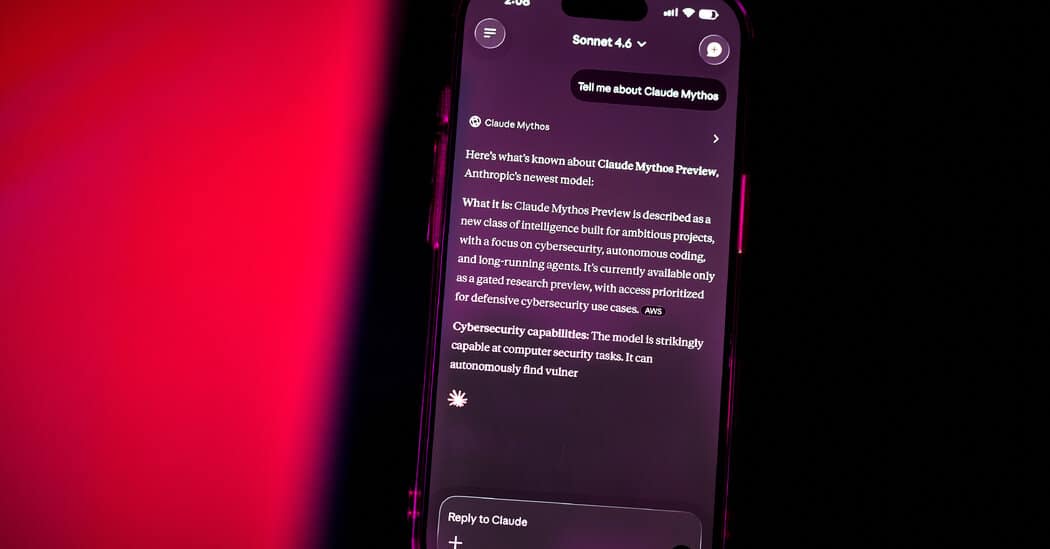
Anthropic, one of the leading artificial intelligence companies in the United States, has made progress in restoring access to its powerful Mythos 5 model after a two-week government ban. The Commerce Department announced on Friday that it had lifted restrictions for some clients, marking a significant de-escalation in tensions between Anthropic and the Trump administration.
A Tense Standoff Resolved
The deal came after several days of intense negotiations between Anthropic and federal officials. Initially, the U.S. government had ordered the company to disable its Mythos 5 model on June 12 due to national security concerns. The decision was based on a paper published by Amazon researchers that highlighted potential vulnerabilities in software code when interacting with AI models.
Anthropic’s response was swift but not without controversy. The company discovered that the administration’s concern stemmed from this research, which suggested that AI models could be exploited to expose weaknesses in software systems. However, cybersecurity experts noted that similar tests had not been conducted on models from other U.S.-based companies, raising questions about whether Anthropic was being unfairly targeted.
Safeguards and Ongoing Negotiations
As part of the agreement, Anthropic agreed to implement additional safeguards on its AI models in exchange for restoring access to hundreds of clients. The Commerce Department’s letter emphasized that these efforts had led to “significant progress” and that Anthropic had committed to working with the government on future protocols.
Despite this breakthrough, negotiations are still ongoing regarding the restoration of access to Fable 5, another powerful model from Anthropic. Additionally, there is no indication yet whether the administration will fully lift all restrictions or establish a more formal process for other AI companies to follow in order to avoid similar issues.
A Broader Trend in Government Oversight
This incident is part of a broader trend where the U.S. government is increasingly involved in regulating and overseeing the development of AI technologies. The Trump administration’s actions against Anthropic are not isolated; they reflect a growing interest in managing how these models are released and used, particularly for national security purposes.
The conflict between Anthropic and the Pentagon began earlier this year when the company was awarded a $200 million contract to develop AI systems for military use. However, disagreements over the technology’s application led Defense Secretary Pete Hegseth to label Anthropic as a “supply chain risk” in February—a designation that had never been applied to an American company before.
Anthropic took legal action against the government over this labeling, but the situation has since evolved into a more complex regulatory landscape. The administration’s interest in controlling AI model releases appears to be expanding beyond just Anthropic.
Rivalry and Regulatory Pressure
The situation is further complicated by competition with Anthropic’s main rival, OpenAI. Earlier on Friday, OpenAI unveiled GPT-5.6 Sol, claiming it matched the performance of Mythos 5 on standard benchmark tests. The company said it would initially share the technology only with a select group of companies approved by the administration.
OpenAI expressed concerns about the long-term implications of such government access processes, stating that they should not become the norm. Instead, the company argued that this approach was a temporary measure to ensure broader availability in the future.
Other Companies Face Similar Scrutiny
The U.S. government is also exerting pressure on other AI companies to submit their models for voluntary review. Meta, one of the few major U.S.-based developers not yet to agree to share its models with the federal government, was recently asked by the administration to do so.
This move comes as part of a larger initiative led by the Biden administration to create the Center for AI Standards and Innovation, which is tasked with evaluating AI models. The center, overseen by Commerce Secretary Howard Lutnick, aims to establish technical standards and ensure that AI technologies are developed responsibly.
Interesting Reads
Conclusion
The recent agreement between Anthropic and the U.S. government marks a significant step in resolving tensions over AI model access and national security concerns. While the deal allows for some clients to regain access to Mythos 5, it also highlights the growing role of federal oversight in the development and deployment of AI technologies.
As other companies like OpenAI and Meta face similar scrutiny, the landscape for AI innovation is shifting toward greater regulation and collaboration with government agencies. Readers should watch closely for developments regarding the Center for AI Standards and Innovation and how it shapes future policies on AI model releases and safety standards.
Original Source
This article is based on publicly available reporting. For the complete original story, visit the publisher’s article.
Leave a Reply