In recent months, city governments and school districts across Oregon have taken significant steps to integrate artificial intelligence (AI) into their operations and educational systems. These efforts are part of a broader national trend where public institutions are exploring how AI can enhance efficiency, improve learning outcomes, and support community development. However, the journey has not been without challenges, as policymakers and educators grapple with ethical concerns, workforce training, and the need to balance innovation with tradition.
The Challenge of Governance
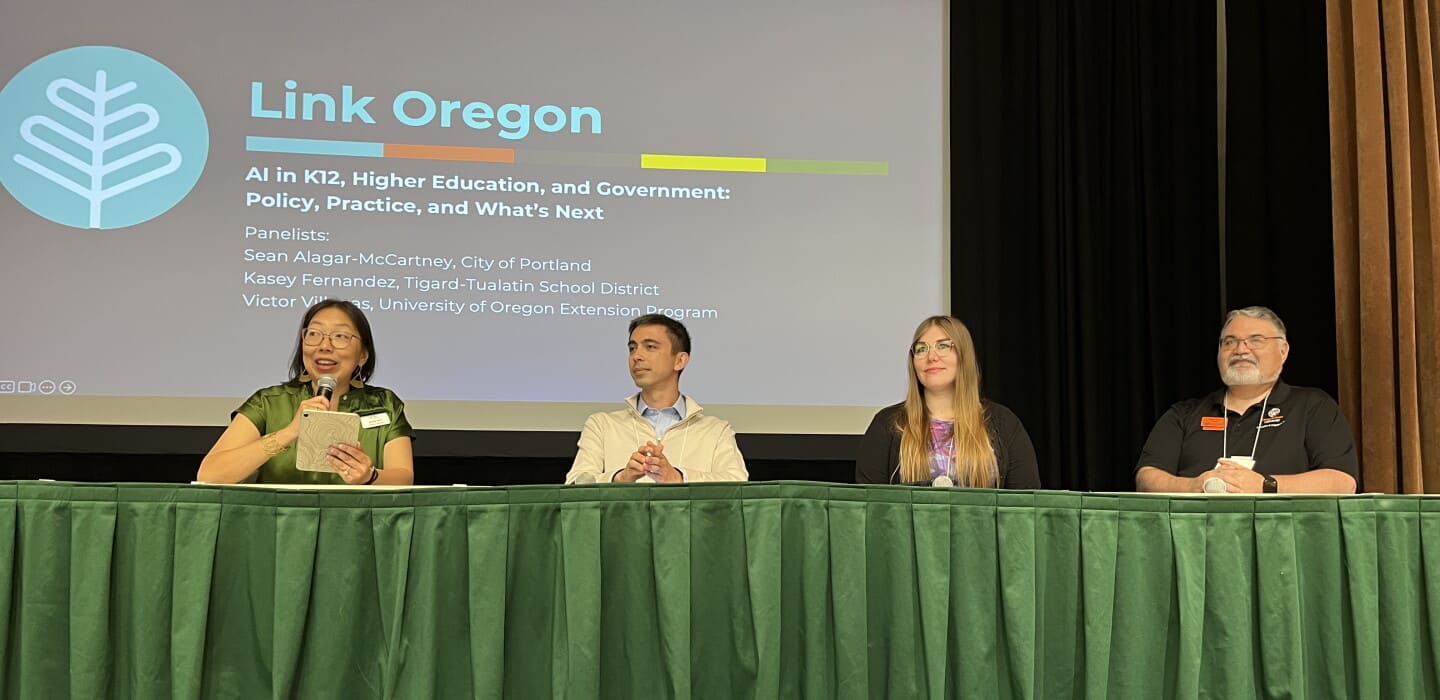
Introducing AI into public services often begins with developing governance policies that ensure safe and ethical use. While this step is crucial, it turns out that crafting these policies is only the beginning of a more complex process. Sean Alagar-McCartney, DevOps and AI governance lead for the Portland Bureau of Technology Services, noted that writing the policy was the easy part.
“Writing the policy was the easy part,” he recalled during an AI panel at Link Oregon’s annual meeting. “The real challenge was answering all of the users’ questions and ensuring we had good guardrails in place to guide them and empower our workforce.”
This sentiment reflects a common theme across public institutions: while policies provide a framework, the true difficulty lies in implementation and ongoing management. Employees must be trained not only on how to use AI tools but also on how to navigate ethical dilemmas that arise when these technologies are applied in real-world scenarios.
Balancing Innovation and Tradition in Education
In the educational sector, the integration of AI has sparked a range of reactions among teachers and students. At Tigard-Tualatin School District, some educators have embraced AI as a valuable teaching tool, while others have raised concerns about its impact on academic integrity and student well-being.
Kasey Fernandez, district library media specialist, described the shift in mindset required to balance analog learning with digital tools. “Going through the cultural shift of balancing analog versus online time is something we also have to make sure we guide,” she said during the same panel discussion.
The district has seen varying levels of adoption across different subject areas. Computer science teachers, for example, were “really on board” with AI, seeing it as a means to enhance coding and problem-solving skills. In contrast, English language arts teachers expressed concerns about academic dishonesty—commonly referred to as cheating—and the potential for students to rely too heavily on AI-generated content.
Despite these challenges, the district has found that maintaining a focus on “problem-based learning” remains essential. This educational approach, which emphasizes real-world applications and critical thinking, aligns well with both traditional teaching methods and modern technological tools.
Flexibility in Higher Education
At the university level, institutions like Oregon State University (OSU) have taken a more flexible approach to AI adoption. Victor Villegas, broadband and digital technologies adoption coordinator at OSU Extension, explained that universities must balance innovation with the need for oversight.
“We open it up broadly enough so there is that flexibility, and yet still have some type of way of governing,” he said. This approach allows researchers and educators to explore AI’s potential without being constrained by overly rigid policies.
OSU, like many state universities, operates a network of county extension offices aimed at bringing resources—technological, economic, and otherwise—to rural communities. In these settings, AI is not always the immediate priority. Instead, foundational issues such as broadband access, affordability, and digital literacy often take precedence.
“AI is almost the last thing we need to talk about,” Villegas noted. “We need to talk about all of the connectivity and privacy issues.” He emphasized that while AI has its place, it should not be viewed in isolation from the broader needs of the community.
The Community-Centric Approach
Across Oregon, public institutions are increasingly adopting a community-centric approach when considering AI integration. This means prioritizing how AI can support local challenges rather than focusing solely on technological advancement for its own sake.
Villegas highlighted that conversations about AI should center on real-world applications: “It’s how do we use AI to help you solve your problems, or to help you learn? Versus, oh, we’re here to learn AI, in and of itself.”
This perspective underscores the importance of aligning AI initiatives with community needs. Whether it’s improving access to digital resources or enhancing educational outcomes, the goal is to ensure that technology serves people rather than replacing them.
Interesting Reads
Conclusion
The introduction of AI tools by city governments and schools in Oregon reflects a growing recognition of their potential to transform public services and education. However, this transformation comes with significant challenges, including ethical considerations, workforce training, and the need for flexible governance frameworks.
As these institutions continue to navigate the complexities of AI integration, it is clear that success will depend on a balanced approach—one that prioritizes both innovation and responsibility. Readers should keep an eye on how Oregon’s public sector evolves in its use of AI, particularly as it relates to community engagement, digital equity, and educational reform.
In the coming months, further developments in policy-making, teacher training, and infrastructure investment will likely shape the future of AI adoption across these sectors. The lessons learned in Oregon could serve as a valuable model for other regions looking to harness the power of artificial intelligence responsibly.
Original Source
This article is based on publicly available reporting. For the complete original story, visit the publisher’s article.
Leave a Reply