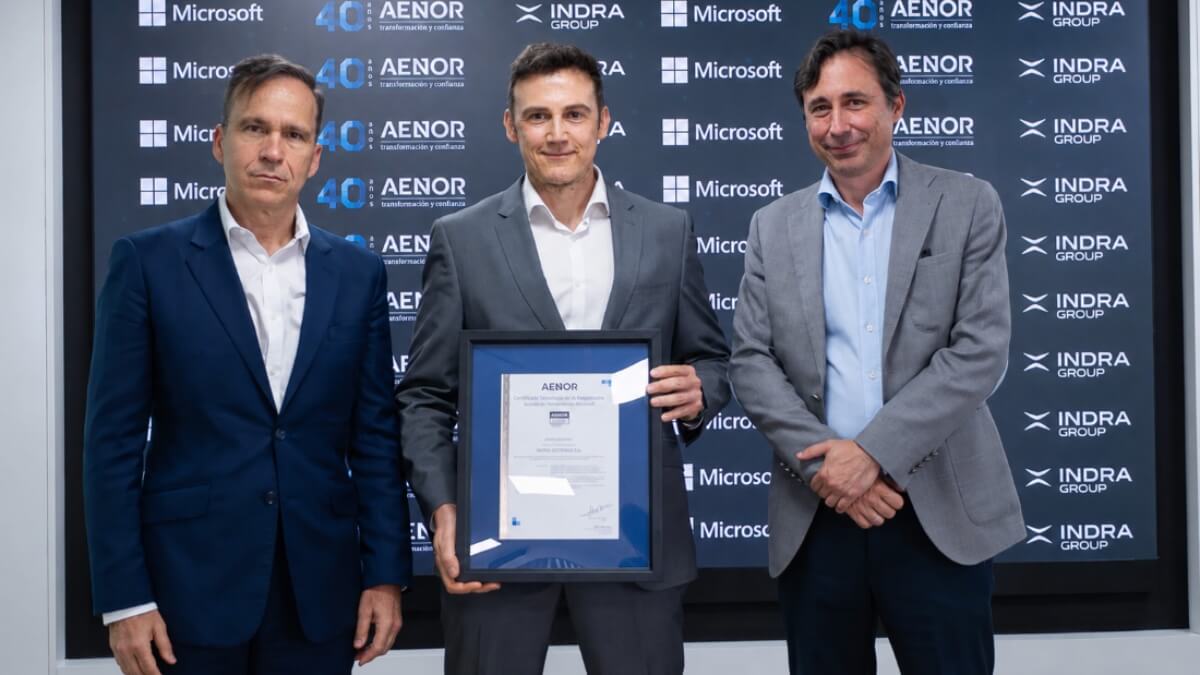
The rise of artificial intelligence (AI) has brought both transformative potential and significant ethical challenges. As businesses increasingly integrate AI into their operations, there is a growing need for frameworks that ensure these technologies are used responsibly, transparently, and in compliance with regulatory standards. Indra Group, a leading Spanish technology company, has taken a pioneering step by becoming the first organization to receive certification from AENOR under its “Responsible AI Technology based on Microsoft tools” program. This milestone marks a critical moment in the evolution of responsible AI practices within corporate environments.
A Practical Model for Responsible AI Implementation
The rapid adoption of generative AI and AI agents has reshaped how organizations operate, make decisions, and deliver services. However, this shift also raises complex questions about accountability, bias, transparency, and data governance. To address these challenges, AENOR and Microsoft have developed a certification framework that provides verifiable criteria for implementing responsible AI controls in operational environments.
This framework emphasizes three core principles: the integration of technical, operational, and organisational controls from the design stage; the continuous application of data quality measures, technical safeguards, and control mechanisms throughout the AI lifecycle; and the generation of objective evidence to demonstrate compliance with responsible AI standards. By adhering to these criteria, organizations can move beyond theoretical discussions about AI ethics and instead focus on creating scalable, real-world models for responsible AI deployment.
Certification Applied to Real-World Use Cases
Indra Group’s certification is not just a symbolic achievement—it represents the successful application of responsible AI principles in practical business scenarios. The company has validated its approach by implementing AI agents across several critical use cases, demonstrating how these technologies can be used responsibly and effectively within an enterprise setting.
Among the certified systems are:
- Onboarding Agent: A support system designed to assist new professionals in integrating with Indra’s technology group.
- Regulatory Compliance Supervisor Agent: A tool that ensures adherence to and continuous improvement of the ISO/IEC 20000 management system, which is a global standard for IT service management.
These agents have been developed using Microsoft Copilot Studio technology and have undergone rigorous validation processes to ensure their operational control, traceability, and responsible use. The certification process has confirmed that these systems not only meet technical standards but also align with broader ethical and regulatory expectations.
Indra Group’s Case Study: From Experimentation to Scalable Corporate Model
Indra Group’s journey toward responsible AI adoption began with a clear recognition of the challenges associated with deploying AI at scale. According to Carmen Bauset, Head of Systems Governance at Indra and project leader, “The challenge lies not in the AI model itself, but in how it is designed, configured, and operated.” This insight underscores the importance of control mechanisms that are embedded throughout the AI lifecycle rather than relying solely on algorithmic integrity.
To address these challenges, Indra has developed a proprietary methodology for managing AI agents. This approach is structured around six key phases:
- Understanding Business and Requirements: Identifying the specific needs and objectives of the organization.
- Data Understanding: Assessing the quality, relevance, and ethical implications of data sources.
- Data Preparation: Cleaning, labeling, and structuring data to ensure accuracy and reliability.
- Agent Design and Configuration: Developing AI models with appropriate technical configurations.
- Internal Evaluation and Pilot Testing: Validating performance through stakeholder feedback and controlled testing.
- Iterative Deployment and Continuous Improvement: Ensuring ongoing refinement and adaptation of AI systems.
This methodology enables Indra to standardize the development and operation of AI agents, ensuring scalability while maintaining control over their use and impact.
Proprietary Methodology Aligned with Industry Standards
The AENOR certification recognizes Indra’s proprietary methodology as a key component of its responsible AI strategy. This approach is integrated within Indra’s Enterprise AI Operating Model (EAOM), an operational framework designed to manage the industrialized scaling of AI agents in a standardised and measurable manner.
Within this model, the certification process verifies that the controls and mechanisms defined for AI systems are effectively applied in real-world use cases. It assesses not only the technology used but also how it is managed throughout its lifecycle, ensuring alignment with Microsoft’s Responsible AI principles and AENOR’s ethical guidelines.
This validation highlights the importance of combining technical excellence with governance frameworks to create a responsible AI ecosystem that can be trusted by both internal stakeholders and external regulators.
Collaboration Driving Innovation in the Responsible AI Ecosystem
The success of Indra Group’s certification is not solely the result of its own efforts but also stems from strong collaboration between three key players: Microsoft, AENOR, and Indra. This partnership has enabled a joint working model that aligns technological capabilities with the requirements for control and certification.
One of the most significant outcomes of this collaboration is the creation of a unified framework for responsible AI adoption. By bringing together expertise in technology development, regulatory compliance, and operational management, these organizations have demonstrated how cross-industry cooperation can drive innovation while ensuring ethical standards are met.
This collaborative approach also highlights the role of human expertise in the age of AI. While AI systems are becoming increasingly sophisticated, their design, configuration, and operation still depend on the judgment and oversight of skilled professionals. The involvement of experts from all three organizations has been crucial in developing a model that is both technically sound and ethically robust.
Interesting Reads
Conclusion
Indra Group’s achievement marks a significant milestone in the responsible adoption of artificial intelligence within corporate environments. By obtaining the first AENOR certification for “Responsible AI Technology based on Microsoft tools,” Indra has demonstrated how organizations can move beyond theoretical discussions about AI ethics to implement practical, scalable models that align with regulatory and market standards.
This case study offers valuable insights into the challenges and opportunities of responsible AI deployment. It underscores the importance of integrating technical, operational, and organisational controls throughout the AI lifecycle and highlights the role of collaboration in driving innovation while maintaining ethical integrity.
For readers interested in following this development, it will be important to monitor how other organizations adopt similar frameworks and how regulatory bodies continue to refine their standards for responsible AI. As AI continues to shape industries across the globe, the lessons learned from Indra’s journey will serve as a blueprint for responsible innovation in the years ahead.
Original Source
This article is based on publicly available reporting. For the complete original story, visit the publisher’s article.
Leave a Reply