
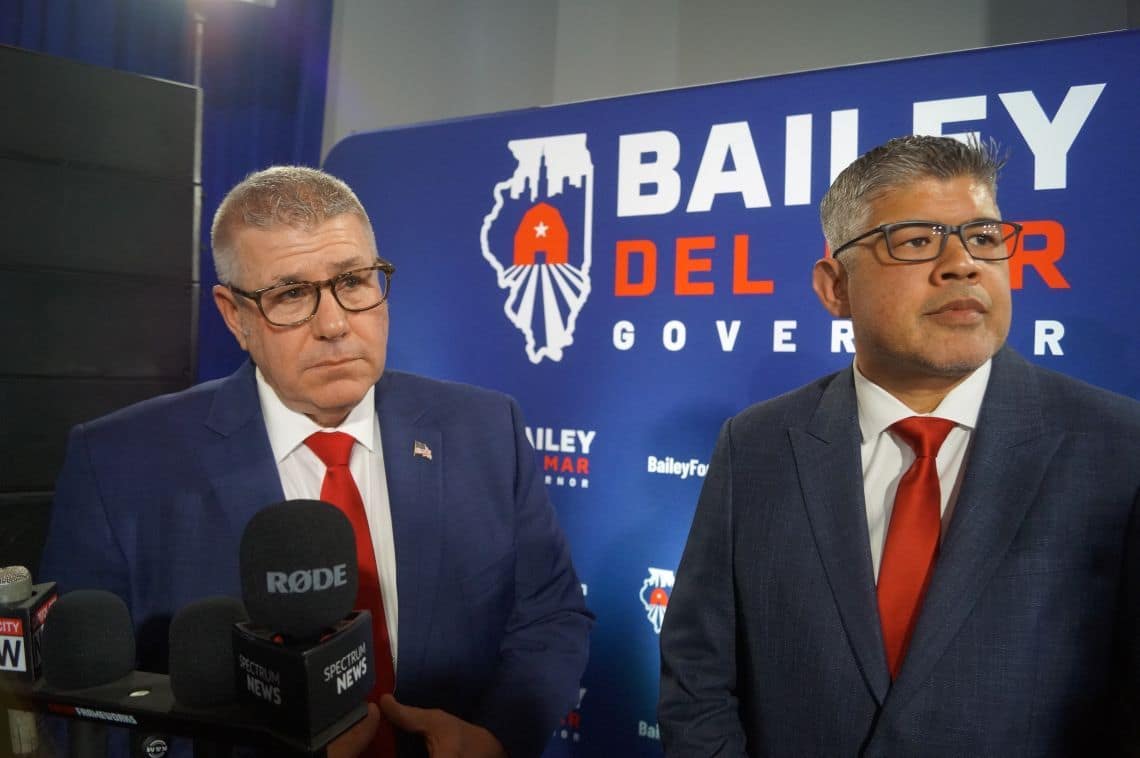
In the evolving landscape of modern political campaigning, artificial intelligence (AI) is becoming an increasingly prominent tool. Republican gubernatorial candidate Darren Bailey and his running mate Aaron Del Mar are at the forefront of this shift, using AI-generated images and videos to engage voters and bolster their campaign’s digital presence. As Illinois prepares for a pivotal election, the integration of AI into political strategy highlights both its potential and the ethical questions it raises.
The Rise of AI in Political Campaigns
Artificial intelligence is no longer confined to tech companies or research labs—it’s now part of everyday life, including politics. Bailey’s campaign has embraced this trend by leveraging AI to create visually striking content that captures attention on social media platforms. From surreal images of Gov. JB Pritzker lounging on a beach to videos depicting him as a shady billionaire, the campaign is using AI to craft narratives that resonate with voters.
Del Mar emphasized that AI-generated content offers unique advantages over traditional methods. “When you start posting some of these AI images, the engagement goes off the roof,” he said. This increased visibility is crucial for Bailey’s campaign, which relies heavily on small-dollar donations and lacks the financial resources of Pritzker’s well-funded operation.
Cost-Effective and Attention-Grabbing
One of the key benefits of using AI in political campaigns is cost efficiency. Traditional graphic design can be expensive, especially when creating high-quality images or videos for a large-scale campaign. By contrast, AI tools allow for rapid content creation at a fraction of the cost. Del Mar noted that this not only saves money but also enables the campaign to maintain a consistent and dynamic online presence.
The effectiveness of AI-generated content is further underscored by its ability to bypass traditional media channels and reach voters directly through social platforms. This direct engagement can be particularly valuable for campaigns with limited resources, as it allows them to compete more effectively against well-funded opponents like Pritzker.
Misleading Imagery and Ethical Concerns
While AI offers new opportunities for political messaging, it also raises significant ethical concerns. Critics argue that the use of AI-generated content can blur the line between fact and fiction, potentially misleading voters. For instance, some of Bailey’s campaign materials depict Pritzker in exaggerated or fictional scenarios, such as lounging on a beach or engaging in questionable financial activities.
Pritzker’s campaign has taken a firm stance against the use of AI-generated images, emphasizing that they are not only misleading but also unethical. Campaign manager Chris Shallow stated that while AI is used for behind-the-scenes tasks like data analysis and cybersecurity, it should not be employed to create false or misleading content. “What Darren Bailey is doing is creating fictional, completely-generated-by-AI content that is not even remotely based in reality,” he said.
A Growing National Trend
Bailey’s campaign is part of a broader national trend where AI is being used increasingly in political campaigns. From fabricated images to deepfake videos, the technology is changing how candidates communicate with voters. This shift has sparked debates about transparency and accountability in politics, as well as the need for clear regulations to prevent misuse.
The use of AI in this context also reflects a broader cultural shift toward digital engagement. Voters are increasingly consuming political content through social media, making it essential for campaigns to adapt their strategies accordingly. However, this adaptation comes with challenges, including the potential for misinformation and the erosion of trust in political messaging.
The Role of Regulation
As the use of AI in politics continues to grow, so does the need for regulation. Pritzker has publicly expressed support for measures that would require transparency in AI-generated content, such as watermarks or disclaimers indicating that an image or video is not real. Similarly, Del Mar supports similar requirements, arguing that a simple disclaimer can help maintain trust without stifling innovation.
Illinois lawmakers are also considering legislation to address these concerns. A proposed bill aims to require disclosures for AI-generated political ads, ensuring voters are aware of the content’s nature. While such measures may face challenges in balancing free speech with the need for transparency, they represent an important step toward managing the risks associated with AI in politics.
The Future of AI in Politics
Despite the ethical and regulatory concerns, there is no denying that AI is becoming a powerful tool in political campaigns. Its ability to create engaging content quickly and cost-effectively makes it an attractive option for candidates looking to maximize their digital reach. However, as its use continues to expand, so too must the efforts to ensure accountability and transparency.
The integration of AI into politics is not just about technological advancement—it’s also about shaping public perception and influencing voter behavior. As campaigns continue to experiment with new tools, the challenge will be to harness the power of AI while maintaining the integrity of democratic processes.
Interesting Reads
Conclusion
As Darren Bailey and his campaign embrace artificial intelligence in their political strategy, they are part of a growing trend that is reshaping how candidates engage with voters. While AI offers significant advantages in terms of cost and reach, it also raises important ethical questions about transparency and misinformation. The debate over its use in politics highlights the need for thoughtful regulation to ensure that technology serves democratic values rather than undermining them.
For readers interested in this topic, the next key developments will likely focus on legislative efforts to regulate AI-generated political content and how major campaigns adapt their strategies in response. As AI continues to evolve, so too will its role in shaping the future of politics.
Original Source
This article is based on publicly available reporting. For the complete original story, visit the publisher’s article.
Leave a Reply