
Table of contents:
- Search used to reward people who knew how to search
- The first answer is becoming the only answer
- Websites are suddenly competing against their own content
- SEO is becoming AEO
- People are asking much better questions
- Search engines are becoming AI companies
- This doesn't mean websites are dying
- The new skill isn't Googling—It's asking better questions
- The future is probably both
For more than twenty years, “Google it” has been the default answer whenever someone needed information. Whether it was fixing a leaking tap, researching a university assignment, comparing smartphones, or finding the best pizza in town, typing a few keywords into a search engine became second nature.
Today, that habit is quietly disappearing.
Millions of people now ask ChatGPT, Claude, Gemini, Perplexity, or another AI assistant instead of opening Google. Instead of carefully choosing keywords, they simply ask a question the same way they’d ask another person.
It’s a subtle shift, but one that could fundamentally reshape how information is created, discovered, and monetized on the internet.
Search used to reward people who knew how to search
Traditional search engines expected users to understand their language. Finding exactly what you wanted often meant experimenting with keywords, quotation marks, minus signs, or adding words like reddit or 2026 to get better results. People unknowingly became skilled at “speaking Google.” Need a Windows fix?
Instead of typing:
Why won’t Windows recognize my second monitor?
many users learned to search:
windows second monitor not detected
Google rewarded concise keywords because that’s how its ranking systems worked. AI completely changes this relationship. Instead of translating your thoughts into search keywords, you simply explain your problem. You can write:
I have a Lenovo laptop connected to two monitors. One stopped working after yesterday’s Windows update. I’ve already restarted everything. What should I try next?
That’s not a search query. That’s a conversation. The AI understands context without forcing you to become a search expert.
The first answer is becoming the only answer
Google has always presented options. Ten blue links. Maybe hundreds of thousands of results. Users were expected to compare sources and decide which one was trustworthy. AI assistants work differently. Instead of presenting ten possible answers, they usually generate one synthesized response. That sounds incredibly convenient—and often it is. But it also changes user behavior. People are much less likely to visit five different websites when the AI already summarized them. This phenomenon has become known as “zero-click search.” Users get what they need without ever visiting the original source. For website owners, that’s both impressive and worrying. For users, it saves time. For publishers, it means fewer visitors.
Websites are suddenly competing against their own content
One of the strangest consequences of generative AI is that websites may help train the systems that eventually replace them. An article explaining how to bake sourdough bread may be summarized by an AI assistant. A review comparing smartphones might become part of an AI-generated comparison. A troubleshooting guide may be condensed into a few paragraphs inside an AI chat. The original publisher still created the information. The reader simply never reaches the website.
This creates a difficult question: If publishers lose visitors, who continues investing time and money into creating quality content?
The internet has always depended on an exchange. Creators publish information. Readers visit. Advertising or subscriptions pay for future work. AI is disrupting that balance.
SEO is becoming AEO
Search Engine Optimization has dominated digital marketing for decades. Businesses optimized pages around keywords, backlinks, loading speed, and technical performance. Now another acronym is gaining attention:
Answer Engine Optimization (AEO).
Instead of asking:
“How do I rank first on Google?”
Businesses increasingly ask:
“How do I become the answer AI assistants quote?”
That requires a different writing style. Articles need to be:
- clear
- factual
- well structured
- authoritative
- easy for AI systems to understand
Ironically, writing naturally for humans often turns out to be the best optimization for AI as well. Keyword stuffing and awkward SEO tricks simply don’t work nearly as well anymore.
People are asking much better questions
One underrated benefit of conversational AI is that people ask more complex questions than they ever would in Google. Instead of searching:
best laptop
they ask:
I’m a university student studying engineering. I occasionally edit videos, travel frequently, and my budget is around €1,500. Which laptop should I buy and why?
Instead of:
vacation italy
they ask:
We’re a family of four with two young children. We want warm weather, good beaches, minimal driving, and somewhere that’s affordable in September.
These aren’t keyword searches. They’re complete scenarios. That allows AI to give far more personalized recommendations. The quality of the answer often depends more on the quality of the question than ever before.
Search engines are becoming AI companies
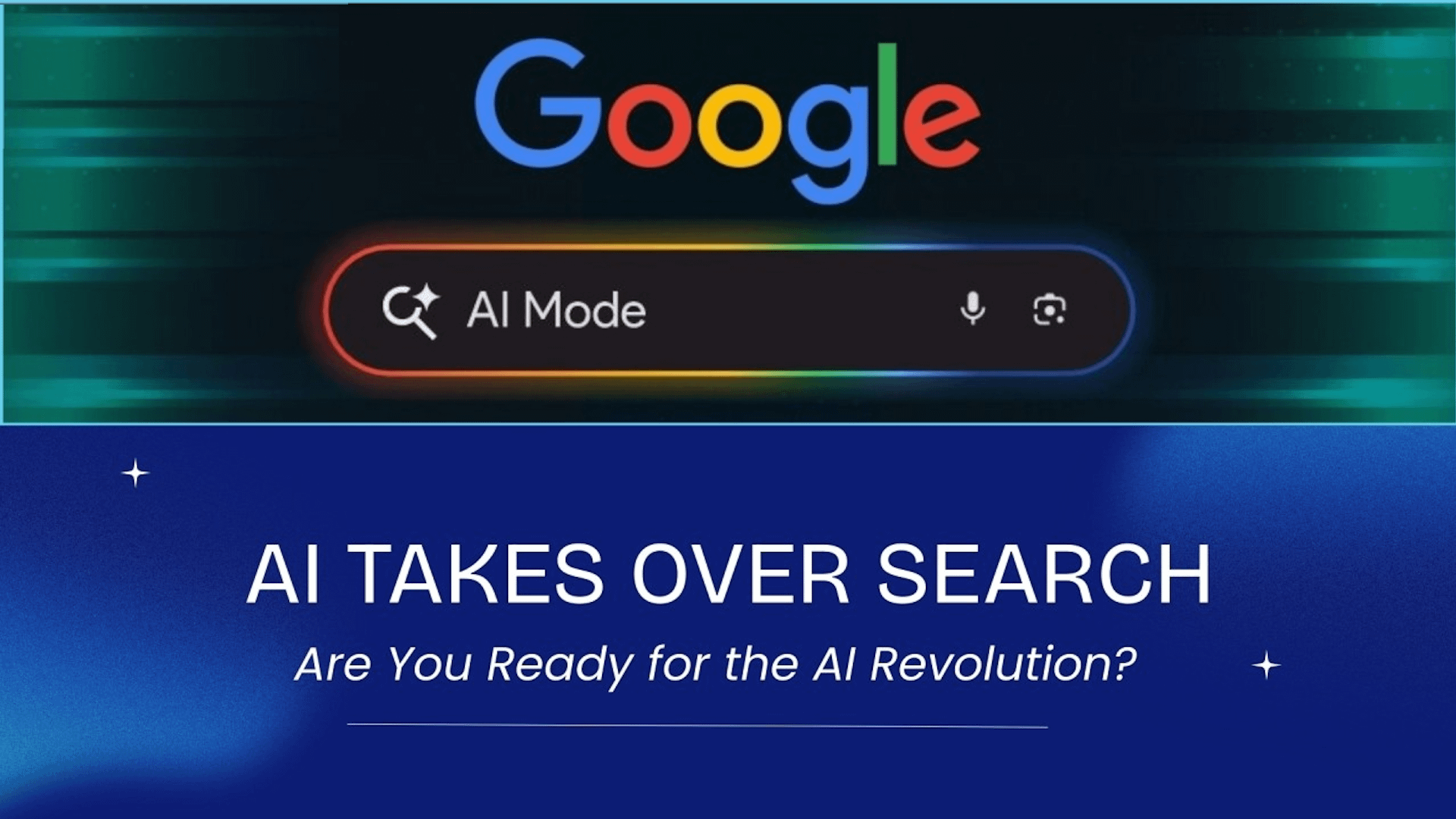
Google isn’t ignoring this trend. Neither is Microsoft. Instead of treating AI as a separate product, search engines are embedding AI directly into search itself. Search results increasingly begin with AI-generated summaries. Traditional blue links are moving further down the page. The distinction between “search engine” and “AI assistant” is slowly disappearing. In a few years, younger internet users may not even understand why people once had to browse multiple websites just to answer a simple question.
This doesn’t mean websites are dying
It’s tempting to assume websites will become obsolete. That probably won’t happen. People still want reviews written by real users. Experts still produce original research. Journalists still investigate stories. Communities still exist on forums. Videos still explain things visually better than text. AI cannot invent reliable information out of thin air. It depends on humans continuing to create it. The role of websites may simply evolve. Rather than serving millions of casual search visitors, they may increasingly become the trusted sources that AI systems reference. Authority will matter more than sheer volume.
The new skill isn’t Googling—It’s asking better questions
For years, digital literacy meant knowing how to search. Tomorrow it may mean knowing how to prompt. Understanding how to provide context, clarify goals, request comparisons, and verify information is becoming a valuable skill. Ironically, AI isn’t replacing curiosity. It’s rewarding it. People who ask thoughtful questions generally receive dramatically better answers than those who ask vague ones. That’s true whether they’re using ChatGPT, Gemini, Claude, or whatever AI assistant comes next.
Want to see how much better AI answers can become? Try improving your prompt below.
AI Prompt Improver
Improved Prompt
The future is probably both
Google isn’t disappearing. Neither are websites. Instead, we’re entering a hybrid era. Sometimes you’ll want direct answers from AI. Other times you’ll want to verify information yourself, read multiple opinions, or dive deep into expert analysis. The most successful websites will adapt rather than resist this change. Instead of focusing solely on ranking in traditional search, they’ll create genuinely useful, trustworthy content that both humans and AI systems recognize as valuable. For users, the internet is becoming easier to navigate. For creators, it’s becoming more challenging to stand out. And for everyone, one thing is becoming clear: The age of mastering Google is slowly giving way to the age of mastering questions.
Leave a Reply