Introduction
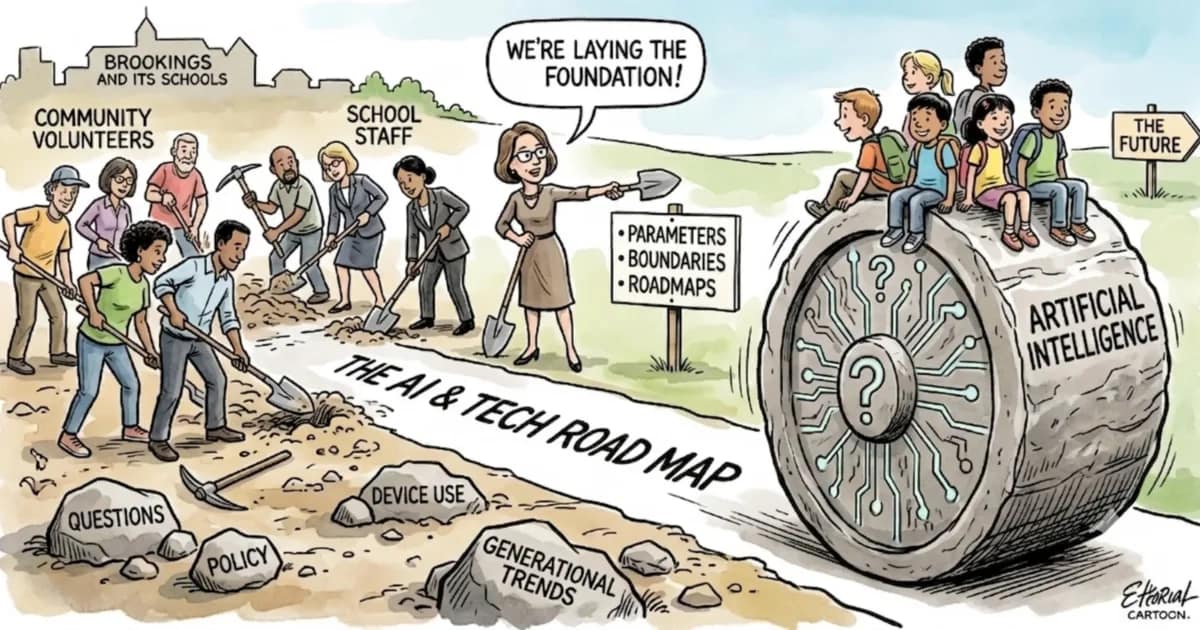
Artificial intelligence (AI) is rapidly transforming the educational landscape, raising questions about its role in classrooms. A recent editorial cartoon captures this tension by depicting a school setting where AI tools are being introduced to students and teachers. The image shows a classroom with children using tablets that display animated robots, while a teacher stands at the front, looking both intrigued and concerned. This visual metaphor highlights the dual nature of AI: its potential as an educational tool and the uncertainties it brings.
The Rise of AI in Education
Artificial intelligence has become increasingly integrated into various sectors, including education. From personalized learning platforms to automated grading systems, AI is being leveraged to enhance teaching methods and student engagement. According to a 2023 report by the World Economic Forum, over 65% of educational institutions globally are now experimenting with AI technologies.
The integration of AI in schools is driven by several factors. One key reason is the need for more personalized learning experiences. Traditional classroom settings often struggle to cater to individual student needs due to limited resources and time constraints. AI-powered tools can analyze a student’s performance data and adapt lessons accordingly, providing tailored support that was previously unattainable.
Another significant factor is the increasing availability of technology in schools. As digital infrastructure improves, more educators are equipped with devices such as tablets and computers, enabling them to incorporate AI into their teaching practices. This technological shift has made it easier for schools to adopt AI-based solutions without requiring substantial financial investment.
The Promise of AI in Education
The potential benefits of AI in education are vast. One of the most promising applications is personalized learning. By analyzing a student’s strengths and weaknesses, AI can create customized lesson plans that address specific gaps in knowledge. This approach not only improves academic performance but also fosters a more engaging and effective learning environment.
AI can also help streamline administrative tasks for educators. Automated grading systems reduce the time teachers spend on routine assessments, allowing them to focus more on instruction and student interaction. Additionally, AI-driven analytics can provide insights into classroom dynamics, helping teachers identify areas where students may be struggling or excelling.
Moreover, AI has the potential to bridge educational gaps in underserved communities. In regions with limited access to qualified teachers, AI-powered tutoring systems can offer consistent support to students who might otherwise fall behind. These tools can provide real-time feedback and guidance, ensuring that all learners have access to quality education regardless of their location or socioeconomic background.
The Concerns Surrounding AI in Education
Despite its many benefits, the integration of AI in schools is not without challenges. One major concern is the potential for bias in AI algorithms. If training data reflects existing societal inequalities, AI systems may inadvertently reinforce these disparities. For example, an AI tool designed to recommend reading materials might favor certain genres or authors based on historical data, potentially limiting exposure to diverse perspectives.
Another issue is the risk of over-reliance on technology. While AI can enhance learning experiences, it should not replace human interaction and critical thinking skills. Educators worry that excessive use of AI tools could lead to a decline in students’ ability to engage in deep, meaningful discussions or develop independent problem-solving abilities.
Privacy concerns also loom large. As schools collect vast amounts of student data to train AI systems, there is a risk of misuse or unauthorized access. Ensuring the security and ethical handling of this data is crucial to maintaining trust between educators, students, and parents.
Why This Matters
The integration of AI in education represents a significant shift in how knowledge is delivered and absorbed. As schools continue to adopt these technologies, it becomes increasingly important to address both their potential benefits and limitations. The editorial cartoon serves as a visual reminder that while AI offers exciting possibilities for personalized learning and efficiency, it also raises critical questions about equity, bias, and the role of human educators.
For students, the implications are profound. They may grow up in an environment where AI is a constant presence, shaping their learning experiences and interactions with technology. For teachers, the challenge lies in finding the right balance between leveraging AI tools and maintaining the human elements that make education meaningful.
As AI continues to evolve, its impact on education will likely expand beyond what we can currently imagine. The key will be ensuring that these technologies are developed and implemented responsibly, with a focus on equity, transparency, and the well-being of all learners.
Interesting Reads
Conclusion
The integration of artificial intelligence in schools is a complex and multifaceted issue that holds great promise but also presents significant challenges. While AI has the potential to revolutionize education through personalized learning, administrative efficiency, and access to quality resources, it also raises important concerns about bias, over-reliance on technology, and data privacy.
As educators, policymakers, and technologists work together to navigate this evolving landscape, it is essential to prioritize ethical considerations and ensure that AI serves as a tool to enhance, rather than replace, the human elements of teaching. The editorial cartoon serves as a poignant reminder that while AI can be a powerful ally in education, its success depends on how we choose to implement and regulate these technologies.
Readers should continue to watch for developments in AI ethics, educational policy, and technological innovation. Understanding both the opportunities and risks associated with AI in schools will be crucial in shaping a future where technology enhances learning without compromising the values that make education meaningful.
Original Source
This article is based on publicly available reporting. For the complete original story, visit the publisher’s article.
Leave a Reply