
Introduction
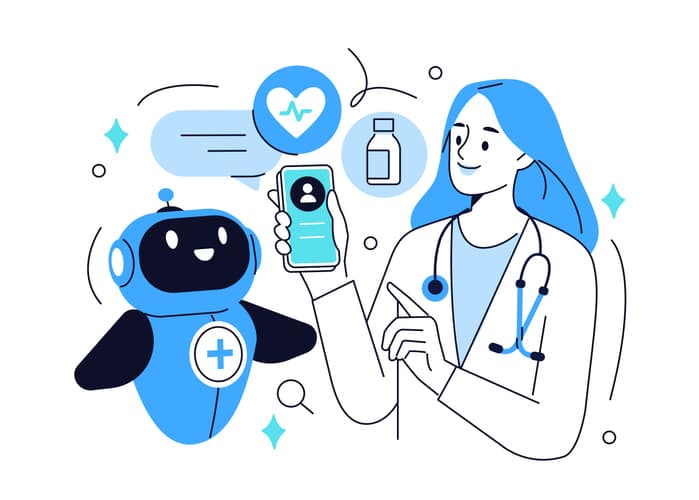
Artificial intelligence is rapidly transforming the healthcare landscape. From virtual assistants to diagnostic tools, AI systems are becoming integral to patient care. Yet, as these technologies gain traction, a critical question emerges: how should humans and machines coexist in medicine? A recent case involving ChatGPT highlights both the promise and pitfalls of this evolving relationship.
In one instance, a woman suffering from chronic cough and internal bleeding saw no progress after consultations with multiple specialists. Her daughter turned to an AI system, which asked a crucial question that had been overlooked: whether she was taking a blood pressure medication known to cause such symptoms. When the medication was adjusted, her condition improved dramatically. This case underscores how AI can offer unique insights in complex medical scenarios.
However, this is not without its challenges. As AI systems become more prevalent in healthcare settings, they are also raising concerns about trust, responsibility, and clinical judgment. The relationship between humans and artificial intelligence in medicine needs careful consideration to ensure that both parties work together effectively while maintaining the integrity of patient care.
Trust and Fluency in AI Interactions
The perceived attentiveness of AI systems is one reason patients increasingly turn to them for medical advice. Unlike human clinicians, AI can respond immediately, ask follow-up questions without showing impatience, and express conclusions with fluency and confidence. This combination of speed and clarity makes AI interactions feel emotionally safer for some patients, especially in situations where they may feel rushed or ignored by healthcare providers.
A 2023 study published in JAMA Internal Medicine found that patients rated AI-generated medical responses as significantly more empathetic and trustworthy than those from physicians. For individuals navigating fragmented care and time-constrained visits, the emotional safety provided by AI can be a welcome relief.
Yet, this trust is not always justified. Fluency does not equate to expertise. Patients may mistake the polished tone of AI responses for accuracy, especially under stress or when they are desperate for answers. The speed at which AI operates can also discourage questioning, leading patients to accept information without critical evaluation. When AI fills gaps in access, time, and empathy, it risks becoming more than a source of information—it becomes a substitute for clinical judgment.
The Risks of Automation Bias
Clinicians are not immune to the same dynamics that affect patients. As AI tools become more integrated into healthcare workflows, their influence on decision-making is growing. OpenEvidence, a medical AI company, estimates that over 100 million Americans will be treated this year by physicians using AI-supported tools. These systems can reduce administrative burdens and free up time for clinicians to focus on patient care.
However, early evidence suggests that AI scribes may flatten nuance, failing to capture the distress or psychosocial context of a patient’s condition. In high-pressure environments, peer-reviewed studies show that radiologists may defer to AI triage labels more than intended—a form of automation bias that can contribute to delayed or misdiagnosed care.
These failures are rarely due to negligence but often result from the introduction of tools into workflows without clear boundaries around responsibility. Missing guardrails allow mistakes to scale quickly, creating a risk for both patients and providers. The challenge lies in ensuring that AI systems support rather than replace human judgment while maintaining accountability and transparency in clinical decision-making.
Designing for Judgment, Not Just Accuracy
One emerging framework for addressing these challenges is computational humility. This approach emphasizes designing systems that foreground uncertainty, make model limitations visible, and preserve human judgment rather than obscure it. It means considering not only whether an AI is accurate but also when its output should be questioned, overridden, or ignored.
This requires a multifaceted approach that includes technical performance, emotional vulnerabilities of patients, professional autonomy of clinicians, and the real-world context in which decisions are made. Computational humility ensures that AI systems do not become overreliant tools but rather supportive resources that enhance human capabilities without diminishing them.
In addition to technical considerations, aligning financial incentives with patient-centered outcomes is crucial. Value-based payment models such as Medicare’s Shared Savings and Value-Based Purchasing programs reward health systems for reducing readmissions and improving chronic disease outcomes rather than increasing service volume. In these environments, AI tools are evaluated not just on their technical performance but also on whether they improve real-world outcomes, workflow usability, and patient safety.
When reimbursement and accountability are shared across developers, providers, and payers, the incentive shifts from deploying tools quickly to integrating them responsibly. This shift encourages a more thoughtful approach to AI adoption in healthcare, one that prioritizes long-term benefits over short-term gains.
The Future of Human-AI Relationships in Healthcare
AI is already embedded in healthcare, but what remains unsettled is the relationship modern medicine is willing to build with it. Should this relationship be grounded in fluency and convenience, or should it be structured around clarity, limits, and shared accountability?
The answer lies in how we design, implement, and oversee AI systems in clinical settings. As these technologies continue to evolve, it is essential that we foster a relationship between humans and machines that supports rather than replaces human judgment. This requires ongoing dialogue among clinicians, technologists, policymakers, and patients to ensure that AI serves as a tool for enhancing care rather than a substitute for it.
In the coming years, the focus should shift from merely adopting AI tools to integrating them responsibly into clinical workflows. By doing so, we can create a healthcare system that is both innovative and ethical—one where technology enhances human capabilities without compromising the integrity of patient care.
Interesting Reads
Conclusion
The integration of artificial intelligence in healthcare presents both opportunities and challenges. While AI systems can offer unique insights and improve efficiency, they also raise concerns about trust, responsibility, and clinical judgment. The relationship between humans and machines in medicine needs careful consideration to ensure that both parties work together effectively while maintaining the integrity of patient care.
As we move forward, it is essential to prioritize computational humility, align financial incentives with patient-centered outcomes, and foster a shared accountability model for AI integration. This approach will help create a healthcare system where technology enhances human capabilities without compromising the quality of care.
Readers should watch for ongoing developments in AI ethics, regulatory frameworks, and clinical implementation strategies as these areas shape the future of healthcare. The goal is not to replace human judgment with machine intelligence but to build a collaborative relationship that supports both innovation and integrity in medicine.
Original Source
This article is based on publicly available reporting. For the complete original story, visit the publisher’s article.
Leave a Reply