
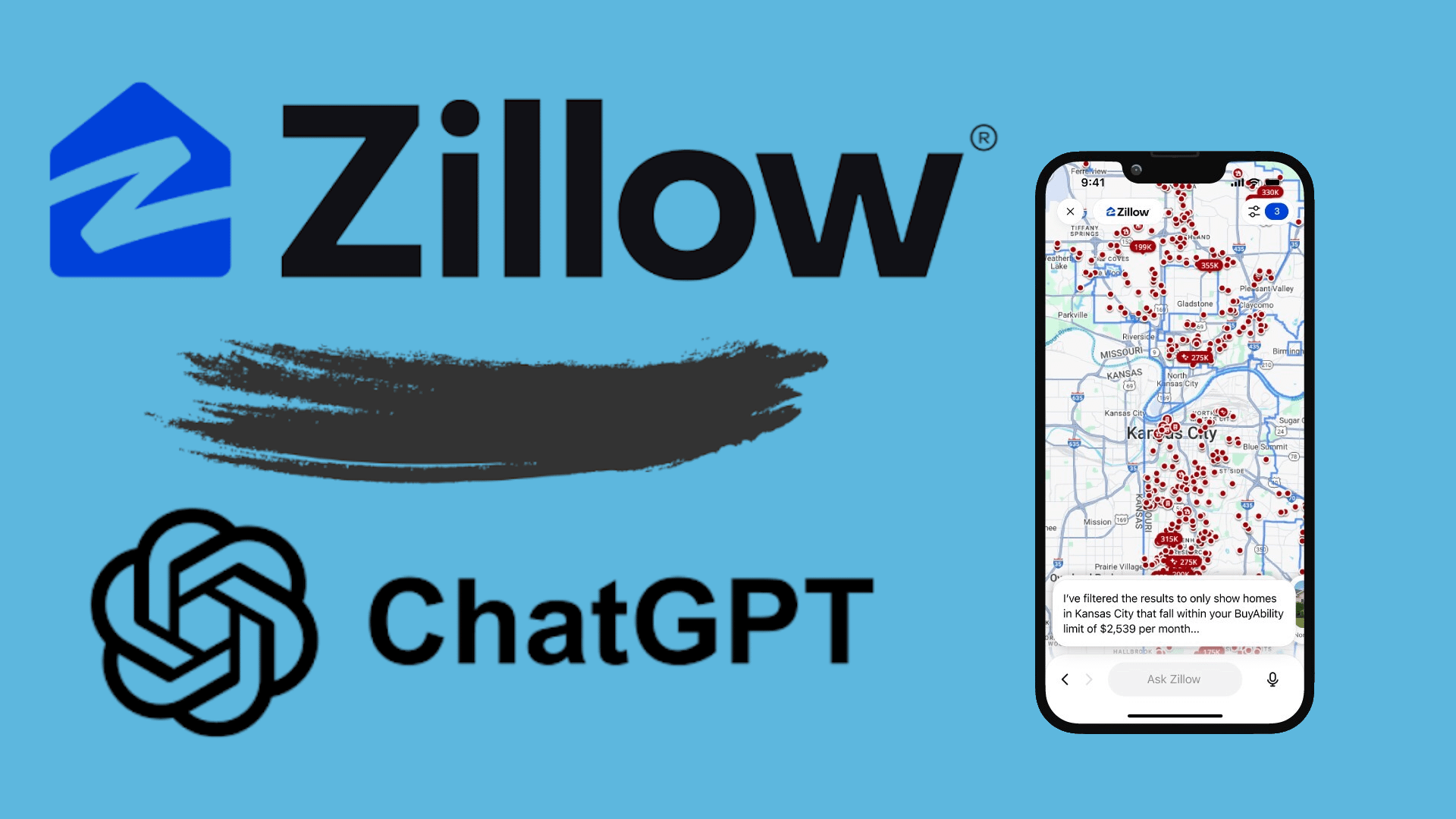
Imagine chatting with an Artificial Intelligence about finding your next home as casually as you’d ask about the weather. That scenario just became real: Zillow has launched an official app within ChatGPT, allowing users to hunt for houses or rentals through a simple conversation. It might sound like a niche real estate update, but it marks something much bigger. This is a subtle yet significant cultural moment, signaling how artificial intelligence is quietly weaving itself into everyday life for everyone – not just tech enthusiasts or home buyers.
Beyond real estate: Why Zillow-in-ChatGPT matters to everyone
Zillow’s integration into ChatGPT isn’t just a new way to browse home listings – it’s a hint of how AI is entering the mainstream. Consider that ChatGPT now boasts over 800 million weekly users worldwide, who use it to “plan, brainstorm and explore ideas” on everything from dinner recipes to travel plans. In other words, millions already treat AI like a helpful everyday tool. By bringing Zillow into that flow, asking about homes becomes as natural as asking about what to cook for dinner or where to vacation. As Zillow’s head of AI put it, “People are already using AI to make everyday decisions,” and now searching for a house can be just as seamless. Even if you’re not looking to move, this shows how any daily question – big or small – might soon be answered with a friendly AI assistant pulling information from trusted services.
Importantly, this isn’t happening on a specialized real estate site or a geeky AI lab; it’s happening in ChatGPT, an AI chat app that many ordinary folks are using for all sorts of day-to-day questions. Zillow is actually the only real estate app in ChatGPT so far, launched as one of the platform’s first partners. That exclusive spot underscores how significant this is: a mainstream brand like Zillow sees ChatGPT as a place it needs to be. When a big consumer company moves onto an AI chat platform, it signals that AI-driven conversations aren’t just for tech demos or novelty anymore – they’re becoming standard. It’s a bit like when businesses in the ’90s realized they needed a website, or when mobile apps became a must-have in the 2010s. Now, an AI chat presence is the new frontier.
ChatGPT becomes a platform: The AI app store moment
Perhaps the most exciting part of this development is what it says about ChatGPT itself. What started as a simple chatbot has quietly evolved into a whole platform where third-party apps can live – almost like an app store within the chat interface. OpenAI (the company behind ChatGPT) recently introduced an “Apps” model for ChatGPT, meaning you can now invoke different services by name during a chat. Booking a flight, discovering music, ordering dinner – all these tasks can be handed off to mini-apps inside the ChatGPT conversation. Zillow and Expedia were among the first companies on board, “securing early positions in what analysts are already calling the potential ‘Windows of AI’”. In tech-speak, that’s like saying this chat platform could become as pivotal for AI as Windows was for PCs – a dominant hub where everybody plays. One report even dubbed ChatGPT’s new ecosystem an “AI super app” in the making, because it could handle so many aspects of our lives in one place.
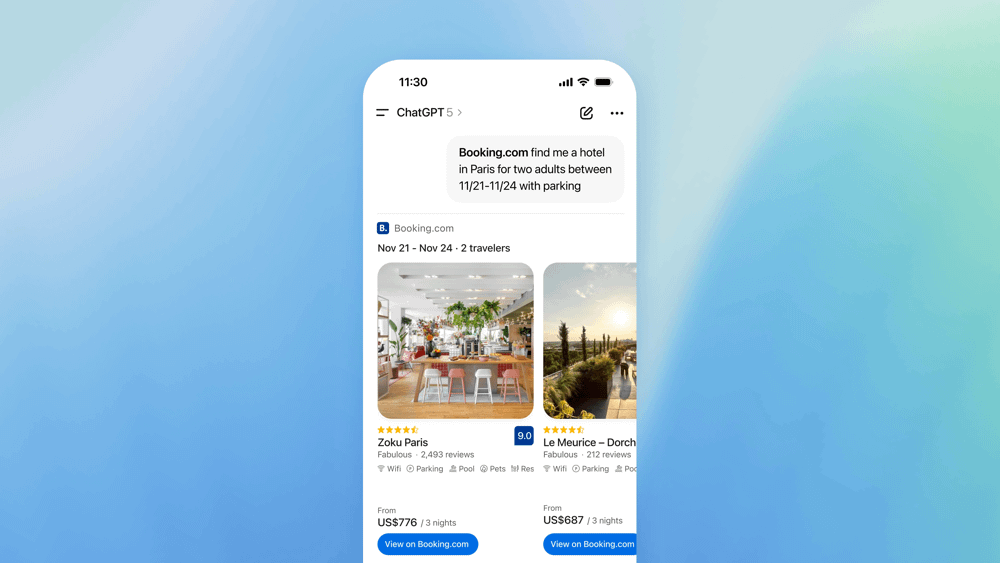
This shift turns ChatGPT into something more akin to an operating system for everyday assistance. Sam Altman, OpenAI’s CEO, hinted at this vision when announcing the platform – comparing it to the early days of mobile app stores and even calling it a “new operating system for the AI era”. Just as smartphones became indispensable by offering apps for “there’s an app for that” situations, AI chat platforms are gearing up to do the same. The difference? You won’t need to swipe through pages of apps on your phone or hop between websites. You’ll just ask, and the right tool will spring into action within the conversation.
For example, if you’re talking about planning a trip, ChatGPT might automatically suggest pulling up Expedia or TripAdvisor info. If you say, “I need a dinner reservation for Friday,” the OpenTable app could step in to help. And now, if you mention house-hunting or say something like “Zillow, find me a two-bedroom rental in Seattle,” ChatGPT will seamlessly bring up Zillow’s interface inside the chat and show you real, up-to-date listings on a map. In tech terms, ChatGPT has become the platform, and these services (Zillow, Expedia, Spotify, OpenTable, and many more) are its “apps.” It’s a quiet app store moment – without the actual store. You just talk, and the apps come to you.
AI for everyone – Even if you’re “Not a tech person”
One of the most profound aspects of this trend is how it lowers the barrier to using sophisticated tools. You don’t need to be “good with computers” to use ChatGPT apps – you just need to know how to have a conversation. That’s a game-changer for casual users who might find juggling multiple apps or websites confusing or tedious. ChatGPT is becoming a central hub for everyday tasks: you can “plan, create and decide without jumping between multiple platforms,” which “saves time and cuts down on friction” for the average person. In plain terms, it makes technology feel more like talking to a helpful friend and less like dealing with a bunch of different websites and apps.
Consider someone who isn’t very tech-savvy trying to organize a family vacation. In the past, they might have to search for hotels on one site, look up flights on another, read travel blogs for itinerary ideas, maybe text a friend for restaurant tips – a lot of digital legwork. Now they can open ChatGPT and just chat: “I want to take my kids to Orlando next spring break. We need a cheap hotel with a pool and some fun activities nearby.” In one thread, the AI (with, say, the Booking.com app and TripAdvisor app working behind the scenes) can offer hotel options, show reviews of local attractions, suggest restaurants, and even help book a reservation. All that without the user ever feeling like they left the conversation or had to figure out a new piece of software. Technology fades into the background, and the focus stays on the goal – a fun family trip.
The same goes for other everyday scenarios. If you’re out running errands and think of a song you want to hear, you might say, “Spotify, play some upbeat music for my drive home.” If you’re brainstorming dinner ideas, you could ask, “What should I cook with chicken and broccoli tonight?” – and maybe a recipe app will chime in with suggestions. None of this requires knowing which app to open or which button to press. It’s just conversation. This ease of use means people who normally wouldn’t bother with high-tech tools might start relying on AI helpers without a second thought. In fact, Zillow’s CTO described their goal for the ChatGPT app as making the experience “simple, intuitive and approachable” – as easy as chatting, so that it “feel[s] natural” even to someone who’s never used Zillow before.
For those who “don’t consider themselves tech people,” this is a subtle cultural shift. You might not think “I’m using artificial intelligence” when you ask ChatGPT to find a home or book a table. And that’s exactly the point – you don’t have to. AI is being normalized as an everyday convenience, wrapped in a friendly interface. Just as many people use GPS navigation without pondering the complex algorithms behind it, soon many will use AI-driven chats to handle daily tasks without feeling like they’re dealing with AI at all.
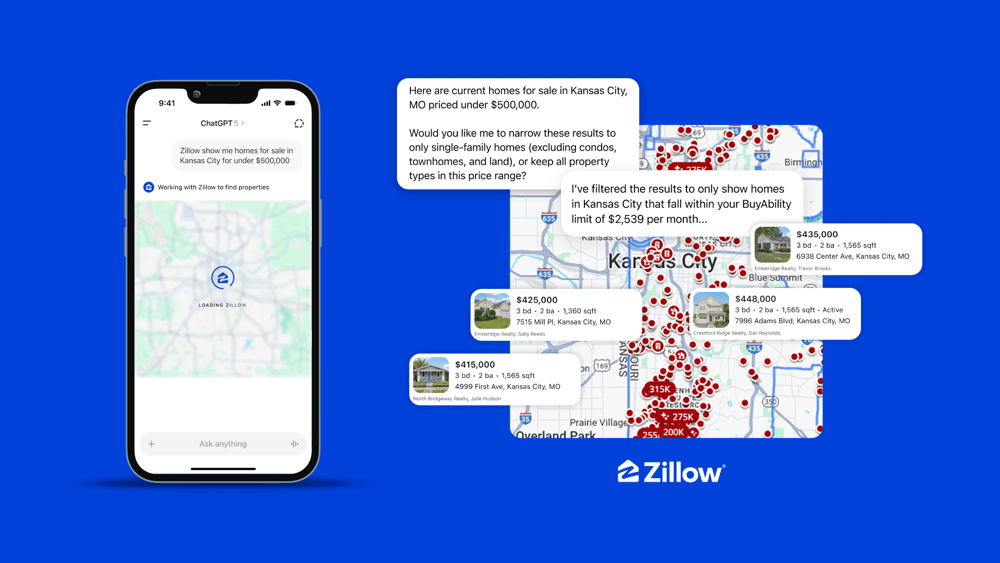
When you ask ChatGPT something like “Zillow, show me homes for sale under $600k in Denver,” the AI will pull up Zillow’s app window right inside the chat – complete with real listings, photos, maps and prices. It’s essentially like having Zillow’s website available via a conversation with your personal assistant. For a casual user, this feels effortless. There’s no separate website to navigate and no jargon to learn; you just express what you want in plain English, and AI handles the heavy lifting. Need to see more details or schedule a house tour? The chatbot can guide you there, handing you off to Zillow’s site when it’s time to do the real-world stuff like booking an appointment. The result is a smooth hand-off between chatting and acting – something that would have seemed like science fiction not long ago.
The new normal: AI as invisible infrastructure
Perhaps the most fascinating thing about this trend is how unobtrusive it is. AI is not coming into our lives with a loud fanfare; it’s slipping in quietly, often unnoticed. We’re witnessing the transformation of AI from a buzzword into invisible infrastructure that underpins our daily routines. In the same way we don’t think about the internet protocols when sending an email, or we no longer marvel at “cloud computing” when watching a Netflix show, we are starting to use AI-driven features without calling them out as AI. As one tech observer noted, “AI is settling into the background, becoming something we use without thinking about it… Soon we’ll stop calling products ‘AI-powered’ altogether. They’ll just be software”. In other words, the technology becomes so normal that we don’t even label it as special anymore.
Think about it: your email spam filter, the autocorrect on your phone, the recommended playlists in your music app – all of these are powered by AI, but we hardly notice. They’re just quietly doing their jobs, embedded in the tools we use. Now, with AI chat apps like ChatGPT hosting a whole array of services, that invisible hand of AI is extending even further. You could be chatting about what couch fits your living room, and an interior design app might pop up in the chat to help – and you might not even realize an AI is at work, beyond the fact that your life just got a tad easier.
Culturally, this marks a shift from AI as a flashy sci-fi concept to AI as a mundane part of life. There’s a popular saying in tech: the most revolutionary technologies are the ones that become invisible. AI seems to be headed exactly that way. It’s moving “quietly from buzzword to backbone” of our daily experiences. Today, we might still get a little amazed – Wow, I can ask ChatGPT to find a house! – but fast forward a bit and it will just be how things work. Kids growing up now may find it completely ordinary that you can talk to your devices and get things done, the same way today’s teens find it obvious that any information they need is at their fingertips online.
And this normalization comes with a subtle cultural change: AI becomes less intimidating and more humanized. When you’re literally having a conversation to get something done, it feels more like talking to a helpful clerk or friend, and less like operating a machine. Zillow’s team noticed that effect – they said the Zillow ChatGPT app “shows the power of AI to make real estate feel more human”, turning what could be a complex search into a simple dialogue. That human-like ease is what will embed AI into everyday life.
We’re also likely to see more creative and everyday examples of AI assistance. Already, people joke about using ChatGPT to help write birthday cards or come up with meal plans. With the new wave of apps, you might use it to plan a date night, get fashion advice, learn a new skill, or even check your finances – all by chat. Each of these tasks might tap a different specialized app behind the scenes, but to you it’s just one cohesive experience. This consolidation of tasks into one AI interface is making AI the invisible glue connecting different parts of our routine.
A quiet revolution in how we live
In hindsight, we may look back at Zillow’s ChatGPT debut as a milestone in a quiet revolution – one where AI became an everyday ally without most people even realizing what was happening. The integration of a real estate app into a chat AI might not grab headlines like a moon landing, but its broader cultural significance runs deep. It shows big companies betting that conversational AI will be a normal way we access services, and it shows consumers starting to embrace that idea, even if subtly.
For general readers and casual tech users, the takeaway is this: AI is not some distant robot future – it’s gently rolling into your life in the form of helpful, conversational apps. You might not care about the intricacies of artificial intelligence, but you’ll surely appreciate if it saves you time and hassle. And that’s how AI wins us over: not with a bang, but with a friendly chat and a useful answer.
In a slightly playful sense, it’s as if our devices have learned manners. Rather than making us adapt to them, they’re adapting to us – speaking our language, fitting into our chats, and quietly handling the hard work. Searching for a new home? Just ask. Need something done? Just ask. AI will quietly take care of it in the background, and you can go about your day. This normalization of AI tools for everyday tasks means that in the near future, we might stop remarking, “Wow, I used AI to do that,” and instead just say, “Wow, that was easy.”
The culture around technology is shifting to expect that ease. As AI apps become invisible infrastructure in our lives, we’ll simply expect our chats, devices, and services to be smart and responsive. Zillow’s ChatGPT app is one early example, but it points to a world where we’ll casually talk to our tech to get most things done. And the beauty of it is, we won’t have to think twice about how it works – we’ll just know that it does. That’s AI’s quiet revolution: becoming so integrated that it’s just another unseen yet indispensable thread in the fabric of daily life.
Leave a Reply