
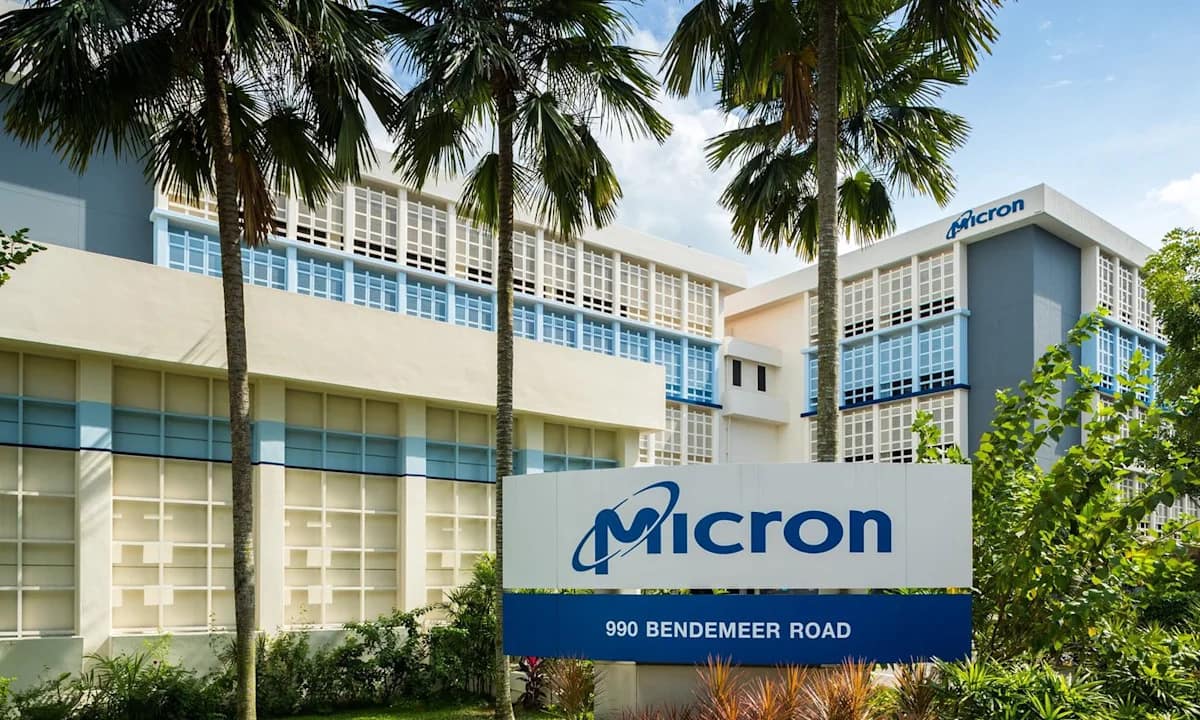
The race to dominate the artificial intelligence (AI) memory market is intensifying, with Micron Technology taking a bold step forward. In an announcement that signals a major shift in semiconductor strategy, CEO Sanjay Mehrotra revealed plans for a $250 billion investment over the coming years to expand U.S.-based manufacturing capabilities focused on AI-driven memory technologies. This move positions Micron as a key player in shaping the future of AI infrastructure, where high-bandwidth memory (HBM) and advanced DRAM are becoming essential components.
A Strategic Shift Toward AI-Driven Memory
Micron’s investment plan is not just about scaling production—it’s about redefining its role in the evolving landscape of AI-driven computing. As artificial intelligence continues to demand more powerful and efficient memory solutions, companies like Micron are racing to meet this growing need. The $250 billion commitment reflects a long-term vision to dominate both DRAM and HBM markets, which are critical for training large language models, running complex simulations, and powering data centers.
The focus on high-bandwidth memory (HBM) is particularly significant. Unlike traditional DRAM, HBM offers much higher bandwidth and lower latency, making it ideal for AI workloads that require rapid data access. Micron’s investment in advanced packaging technologies will enable the production of multi-layered HBM stacks, which are essential for supporting next-generation AI chips from companies like NVIDIA, AMD, and Intel.
Why the Memory Market Is Changing
The memory market has historically been cyclical, driven by demand from consumer electronics such as smartphones and PCs. However, the rise of artificial intelligence is shifting this dynamic. Hyperscalers—large tech companies that operate massive data centers—are now the primary drivers of memory demand. These firms are investing heavily in AI infrastructure, which requires vast amounts of high-performance memory to process large datasets efficiently.
This shift has created a new kind of market resilience. Unlike before, where memory prices would fluctuate with consumer trends, today’s demand is more stable and long-term. Companies like Microsoft, Alphabet, Amazon, and Meta Platforms are not just using AI—they’re building it at scale, which means they need reliable and scalable memory solutions.
Micron’s investment in U.S.-based manufacturing aligns with this trend. By focusing on domestic production, the company can better serve its largest customers while also reducing reliance on global supply chains that have become increasingly vulnerable to geopolitical tensions and logistical disruptions.
Micron’s Domestic Manufacturing Push
Micron is already making progress in expanding its U.S. manufacturing footprint. In New York, the company is constructing a complex with up to four fabrication facilities (fabs) dedicated to high-volume DRAM production. Meanwhile, in Idaho and Virginia, Micron is investing heavily in research and development to accelerate product innovation and modernize existing operations.
This multiyear build-out represents a strategic move to create an end-to-end domestic ecosystem for memory manufacturing. From wafer fabrication to advanced packaging, Micron aims to develop a self-sustaining supply chain that can support both DRAM and HBM production. This approach mirrors the integrated operations of SK Hynix and Samsung in Asia, which have long dominated the global memory market.
By investing in domestic capabilities, Micron is also positioning itself to meet growing regulatory pressures for U.S.-based semiconductor manufacturing. As governments around the world push for greater control over critical technologies, having a strong domestic presence can provide both strategic and economic advantages.
The Road Ahead: Challenges and Opportunities
While Micron’s investment plan is ambitious, it comes with its own set of challenges. Scaling up production to meet AI-driven demand will require significant capital, advanced engineering expertise, and long-term planning. Additionally, competition from SK Hynix and Samsung remains fierce, as both companies are also expanding their manufacturing capabilities in response to the growing AI market.
However, there are clear opportunities for Micron to gain a competitive edge. By focusing on domestic production and investing heavily in R&D, the company can differentiate itself through faster innovation cycles and better alignment with U.S.-based customers. The ability to deliver high-performance memory solutions tailored to AI workloads could position Micron as a preferred supplier for some of the world’s largest tech companies.
Moreover, the growing demand for AI infrastructure is expected to outpace traditional markets in the coming years. This means that companies that can adapt quickly and scale efficiently will be well-positioned for long-term success. Micron’s $250 billion investment represents a significant bet on this future, with the potential to reshape the memory landscape for decades to come.
Interesting Reads
Conclusion
Micron Technology’s $250 billion investment in U.S.-based AI memory chip development marks a pivotal moment in the evolution of semiconductor manufacturing. By focusing on high-bandwidth memory (HBM) and advanced DRAM production, Micron is positioning itself as a key player in the growing AI infrastructure market. This move not only addresses current demand from hyperscalers but also prepares the company for long-term growth in an industry that is rapidly shifting away from traditional consumer cycles.
As the race to dominate AI memory continues, Micron’s strategic investments will be critical in determining its ability to compete with global giants like SK Hynix and Samsung. For investors and industry observers alike, the coming years will be a test of how well Micron can execute on this ambitious vision. Those who watch closely will see whether this investment leads to sustained leadership in the AI memory space or if it becomes just another chapter in the ongoing evolution of semiconductor innovation.
For readers interested in tracking Micron’s progress, key indicators will include its ability to scale production, meet customer demand, and maintain a competitive edge in both DRAM and HBM markets. As artificial intelligence continues to reshape technology, the companies that can adapt quickly and innovate effectively will be the ones shaping the future.
Original Source
This article is based on publicly available reporting. For the complete original story, visit the publisher’s article.
Leave a Reply