
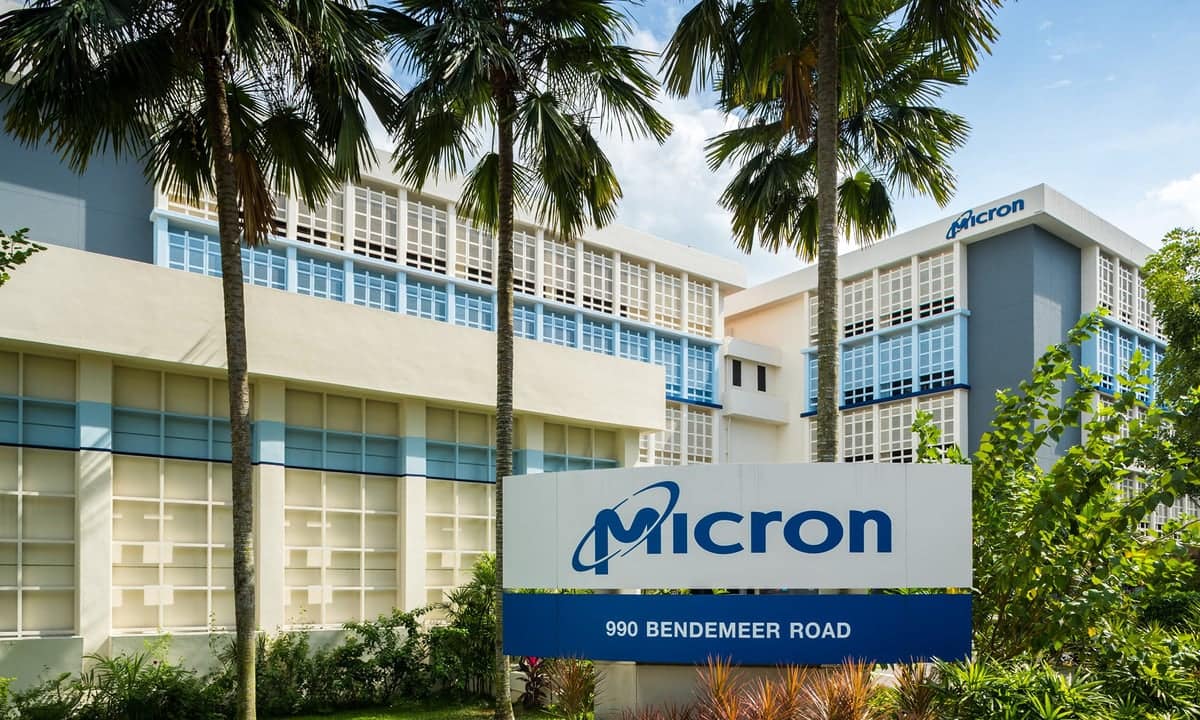
The race to dominate artificial intelligence (AI) memory is heating up, and Micron Technology is making a bold move. The semiconductor giant has announced a $250 billion investment plan focused on expanding its U.S.-based manufacturing capabilities for advanced memory chips, particularly high-bandwidth memory (HBM). This strategic shift underscores the growing importance of memory technology in AI infrastructure and highlights how companies like Micron are positioning themselves to lead the next wave of innovation.
The Shift from Cyclicality to Secular Growth
Memory markets have traditionally been tied to the cycles of personal computers and smartphones. However, the rise of artificial intelligence is changing this dynamic. Hyperscalers such as Microsoft, Alphabet, Amazon, and Meta Platforms are now driving demand for specialized memory solutions that support large-scale AI workloads. These companies require vast amounts of high-performance memory, particularly in the form of HBM stacks, which enable faster data transfer between processors and memory.
This shift from cyclical to secular growth is a key factor behind Micron’s decision to invest heavily in U.S. manufacturing. By scaling up production of advanced DRAM wafers and improving packaging technologies, Micron aims to meet this growing demand while reducing reliance on overseas suppliers. The company’s long-term goal is to produce 40% of total DRAM domestically, a move that could help it close the gap with global competitors like SK Hynix and Samsung.
A Multi-Year Build-Out for Domestic Leadership
Micron’s investment plan includes expanding its U.S. manufacturing footprint through multiple projects. In New York, the company is constructing a complex featuring up to four fabrication facilities dedicated to high-volume DRAM production. Simultaneously, Micron is investing in research and development (R&D) initiatives in Idaho and Virginia to accelerate product innovation and modernize existing operations.
This multi-year build-out represents more than just increased capacity—it’s about creating an end-to-end domestic ecosystem that spans from wafer fabrication to advanced packaging. Such a strategy mirrors the integrated operations of leading Asian competitors like SK Hynix and Samsung, which have long benefited from centralized manufacturing and R&D capabilities.
Micron’s approach is designed to transform earlier, piecemeal investments into a more cohesive platform tailored for sustained leadership in both DRAM and AI-optimized memory solutions. This shift could position the company as a key player in the evolving landscape of AI infrastructure.
The Strategic Importance of HBM and Advanced DRAM
High-bandwidth memory (HBM) is becoming increasingly critical for AI applications due to its ability to handle massive data transfers at high speeds. Unlike traditional DRAM, which operates on a single channel, HBM uses multiple channels stacked together, allowing for significantly higher bandwidth and lower latency. This makes it ideal for training large neural networks and running complex machine learning models.
Micron’s investment in HBM production is therefore not just about meeting current demand—it’s about preparing for the future of AI computing. The company is targeting advanced DRAM wafers and sophisticated packaging techniques that are essential for building high-performance memory stacks. These technologies will be crucial as AI workloads continue to grow, requiring more powerful and efficient memory solutions.
By focusing on these areas, Micron is positioning itself at the intersection of semiconductor manufacturing and AI innovation. This strategic alignment could give it a competitive edge in a market where demand is expected to outpace traditional cycles.
The Broader Implications for the Memory Market
The implications of Micron’s investment extend beyond just its own operations. As one of the largest memory chip manufacturers, Micron’s move signals a broader shift in the industry toward AI-driven growth. This trend could lead to increased competition and innovation across the board, as other companies also seek to capitalize on the growing demand for specialized memory solutions.
Moreover, the emphasis on U.S.-based manufacturing aligns with broader economic and geopolitical considerations. With global supply chains becoming more complex, companies are increasingly looking to localize production to reduce dependency on foreign markets. This could lead to a reconfiguration of the global memory landscape, with more investment in domestic capabilities and potentially higher costs for international suppliers.
For investors and industry observers, Micron’s strategy offers insights into how semiconductor firms are adapting to the AI era. The company’s focus on advanced manufacturing and R&D suggests a long-term vision that could reshape the competitive dynamics within the memory market.
Interesting Reads
Conclusion
Micron Technology’s $250 billion investment in U.S. manufacturing represents a significant step forward in its quest to dominate the AI memory landscape. By shifting from traditional cyclical markets to secular growth driven by artificial intelligence, Micron is positioning itself at the forefront of an industry transformation. The company’s focus on advanced DRAM and HBM production reflects a strategic understanding of where demand is heading.
As the AI revolution continues to reshape computing, companies that can adapt their manufacturing capabilities to meet new demands will be well-positioned for long-term success. Micron’s multi-year build-out offers a glimpse into how one of the industry’s leading players is preparing for this future. Readers should watch closely as the company progresses with its domestic expansion and AI-optimized memory initiatives, which could have far-reaching implications for both the semiconductor industry and the broader tech ecosystem.
Original Source
This article is based on publicly available reporting. For the complete original story, visit the publisher’s article.
Leave a Reply