
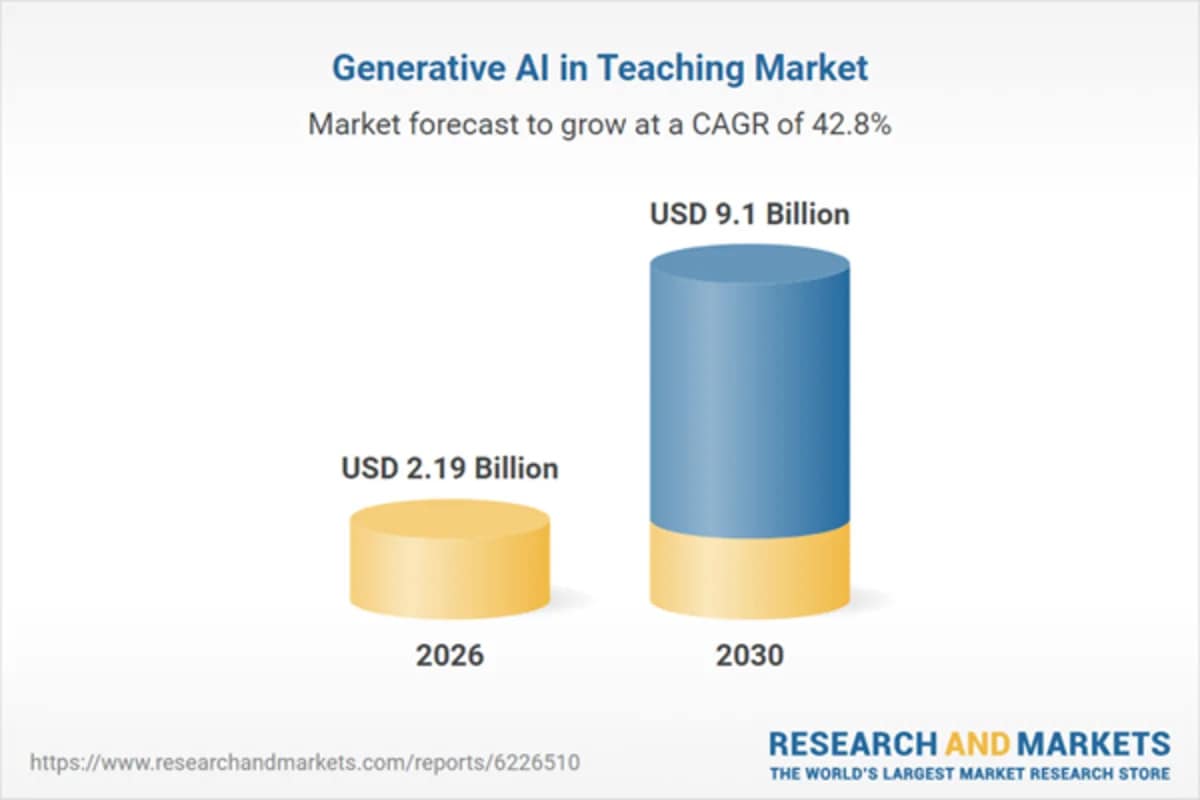
The provided text outlines a comprehensive Generative Artificial Intelligence (AI) in Teaching Market report structure, covering various regions, market segments, competitive analysis, and future forecasts. Below is a summary and breakdown of the key sections and insights, along with an overview of the market dynamics and opportunities for Generative AI in Education.
📈 Generative AI in Teaching Market Overview
🔍 Market Definition
Generative AI refers to artificial intelligence systems capable of creating new content, such as text, images, audio, or video. In education, these technologies are used to develop personalized learning tools, automate grading, create interactive lessons, and support language learning.
🌍 Geographic Breakdown
🇪🇺 Europe
- Germany: A leader in AI adoption; government-backed initiatives like the Digital Strategy 2030.
- France & UK: Strong public-private partnerships for educational innovation.
- Spain: Growing interest in AI-driven personalized learning tools.
🇨🇳 Asia-Pacific (APAC)
- China: Rapid growth due to state-led AI education programs and tech giants like Alibaba and Tencent.
- India: High demand for AI-based tutoring systems, especially in rural areas.
- Japan & South Korea: Focus on AI-enhanced language learning tools.
🇺🇸 North America
- USA: Strong R&D investment; companies like Google, Microsoft, and IBM are leading the charge.
- Canada: Government incentives for AI education startups.
🌎 Rest of the World (ROW)
- Middle East & Africa: Emerging markets with growing interest in AI-driven educational tools.
- South America: Brazil is a key player due to its large population and focus on digital transformation in education.
📊 Market Segmentation
🔧 By Component
- Software (e.g., AI-powered tutoring systems, language learning apps)
- Hardware (AI-enabled devices like smartboards, tablets, etc.)
- Services (training, consulting, integration services)
🎓 By Application
- Personalized Learning Tools
- Automated Grading & Feedback Systems
- Interactive Content Creation
- Language Learning Platforms
🏫 By End-User
- K-12 Schools
- Higher Education Institutions (H.E.I.)
- Corporate Training Centers
- Online Learning Platforms
💰 Market Forecast (2025–2035)
| Region | CAGR (2025–2035) | Market Size (2035, $ Billion) |
|---|---|---|
| North America | ~18% | $45.6B |
| Europe | ~17% | $38.9B |
| APAC | ~22% | $120.5B |
| Rest of the World | ~15% | $28.3B |
🚀 Key Drivers
- Digital Transformation in Education: Schools and universities are increasingly adopting AI to enhance learning experiences.
- Personalization Demand: Students expect tailored content, which Generative AI can deliver efficiently.
- Government Initiatives: Many countries are investing in AI education through grants and policy support.
- Cost Efficiency: AI reduces the need for human intervention in repetitive tasks like grading.
⚠️ Challenges
- Data Privacy Concerns: Use of student data raises ethical and regulatory issues.
- High Initial Costs: Smaller institutions may struggle with adoption due to budget constraints.
- Teacher Resistance: Some educators are hesitant to adopt AI tools, fearing job displacement.
🧠 Innovation Trends
- AI-Powered Language Learning Tools (e.g., Duolingo, Babbel)
- Virtual Tutors and Chatbots (e.g., Squirrel AI, Carnegie Learning)
- Automated Essay Grading Systems
- Interactive Content Creation Platforms (e.g., Nearpod, Kahoot)
📈 Competitive Landscape
🔥 Top Players
- Google LLC – Offers AI tools like Google Classroom and AI-powered chatbots.
- Microsoft Corporation – Azure AI for education platforms.
- IBM – Watson Education solutions.
- Adobe Inc. – AI-driven content creation tools.
- Pearson plc – AI-based learning systems.
- OpenAI – ChatGPT and other generative models used in education.
🚀 Emerging Players
- Duolingo, Coursera, Khan Academy, Quizlet, DreamBox Learning, Moodle Pty Ltd.
💡 Strategies for Growth (2030–2035)
- Invest in AI-Driven Personalization: Focus on adaptive learning platforms.
- Leverage Government Grants and Partnerships: Collaborate with educational institutions.
- Enhance Data Security Measures: Build trust through compliance with regulations like GDPR.
- Expand into Emerging Markets: Target countries in Africa, South America, and the Middle East.
📚 Key Takeaways
- The Generative AI in Teaching market is expected to grow at a CAGR of over 15% from 2025 to 2035.
- APAC will dominate due to high adoption rates in countries like China, India, and South Korea.
- Personalized learning tools and language learning platforms are the fastest-growing applications.
- Collaboration between governments, educators, and tech companies is crucial for sustainable growth.
📌 Conclusion
The Generative AI in Teaching market is poised for significant expansion as educational institutions worldwide seek to modernize their teaching methods. With increasing investments in AI research and development, along with growing demand for personalized learning experiences, the future of education is becoming increasingly AI-driven. Companies that focus on innovation, scalability, and ethical use will be well-positioned to capture this rapidly evolving market.
Interesting Reads
📚 Further Reading
For more details about this report or to access the full version, visit:
https://www.researchandmarkets.com/r/vpoko3
Let me know if you’d like a customized summary for a specific region, segment, or company!
Original Source
This article is based on publicly available reporting. For the complete original story, visit the publisher’s article.
Leave a Reply