
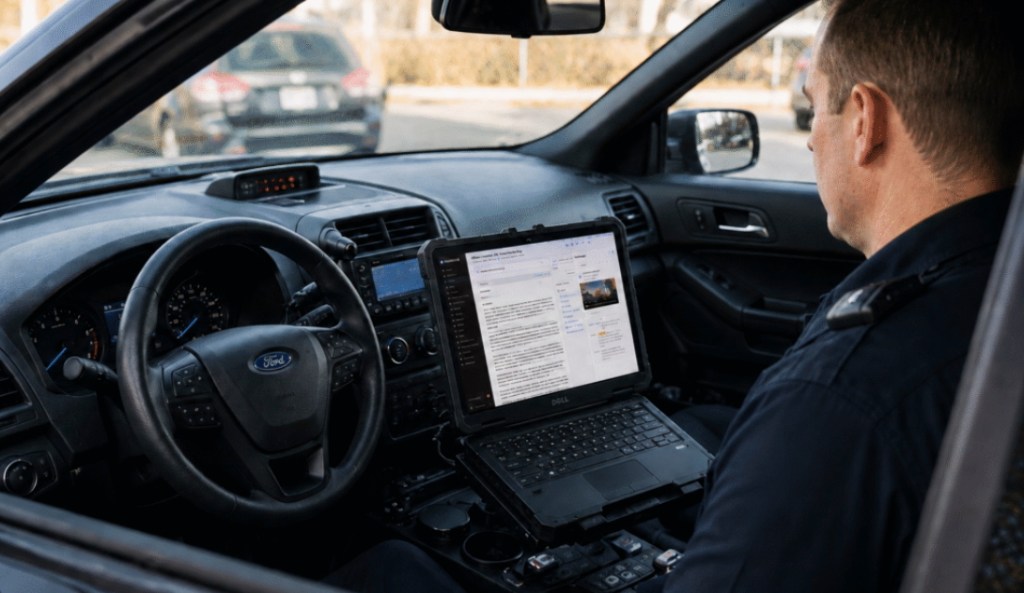
In recent years, law enforcement agencies across the United States have increasingly turned to artificial intelligence (AI) to enhance public safety operations. From facial recognition systems to predictive policing models and automated license plate readers, AI tools are being integrated into police work at an unprecedented pace. However, this rapid adoption has outstripped the development of legal frameworks and ethical guidelines, raising concerns among civil liberties advocates, legal scholars, and technology experts.
The use of AI in policing is not a new phenomenon. For decades, law enforcement has relied on data-driven tools such as automated license plate readers, video analytics, and facial recognition systems to monitor public spaces and track suspects. What is changing now is the scale, speed, and complexity of these technologies. As police departments collect vast amounts of digital evidence—from body camera footage and social media records to jail calls and case files—AI is being used more frequently to sort, analyze, and interpret this information.
This shift has sparked a growing debate about the implications of AI in policing. While proponents argue that the technology can improve efficiency, reduce administrative burdens, and enhance investigative capabilities, critics warn that it could also amplify surveillance, introduce hidden biases into law enforcement decisions, and complicate legal processes by making evidence harder to challenge in court.
The Rise of AI in Law Enforcement
AI is now being used in a wide range of policing functions, from identifying suspects through facial recognition to drafting police reports using natural language processing. Major companies such as Axon, Motorola Solutions, TRULEO, and Flock Safety have developed tools that help law enforcement agencies manage large volumes of data more efficiently.
For example, Mark43, a cloud-based software company serving over 300 public safety agencies, offers AI-powered tools like ReportAI and BriefAI. These systems assist officers in drafting reports using information from dispatch records and body camera footage, while also summarizing case details for investigators and supervisors. The platform allows police departments to choose which AI features they want to enable and who can access them, with audit logs tracking all AI-assisted activity.
While these tools are designed to support rather than replace human judgment, some experts worry that the increasing reliance on AI could lead to a situation where officers place too much trust in automated outputs. This is particularly concerning when it comes to decisions that affect people’s rights and freedoms, such as identifying suspects or recommending enforcement actions.
Concerns About Bias and Transparency
One of the most pressing concerns about AI in policing is the potential for bias. Many AI systems are trained on historical data that may reflect existing patterns of discrimination within law enforcement. For instance, facial recognition technology has been shown to have higher error rates for people of color, which could lead to wrongful identifications or disproportionate targeting.
Rachel Levinson-Waldman, director of the liberty and national security program at the Brennan Center for Justice, warns that AI tools can “supercharge” surveillance and enforcement in ways that are difficult to challenge legally. She points out that without clear regulations, these technologies may be used to justify increased monitoring of marginalized communities.
Another issue is transparency. Many AI systems operate as “black boxes,” meaning their decision-making processes are not easily understandable by the public or even by law enforcement officers themselves. This lack of clarity raises questions about accountability and whether individuals can effectively challenge evidence that has been generated or interpreted by AI.
Legal and Evidentiary Challenges
The use of AI in policing also presents significant legal challenges, particularly when it comes to the admissibility of evidence in court. Police reports often play a critical role in criminal investigations and prosecutions, and if errors are introduced by AI systems—such as inaccuracies, omissions, or misinterpretations—they could have serious consequences for individuals facing charges.
Legal scholars like Andrew Guthrie Ferguson, author of Your Data Will Be Used Against You: Policing in the Age of Self-Surveillance, argue that the traditional investigative process is being upended by AI. Instead of starting with evidence and working toward a conclusion, some systems are now generating potential suspects or leads based on data analysis. This shift could make it harder for defendants to challenge the validity of evidence or understand how conclusions were reached.
To address these concerns, experts recommend several safeguards, including clear disclosure when AI is used in reports, mandatory human verification of all AI-generated text, and regular independent auditing of tools. These measures are intended to ensure that AI systems remain transparent, accountable, and aligned with legal standards.
A Growing Need for Regulation
Despite the growing use of AI in policing, there remains a lack of consistent national regulations governing its deployment. While some states have taken steps to regulate specific technologies—such as facial recognition or automated license plate readers—there is no unified framework that applies across all jurisdictions.
In California and Utah, for example, recent laws have been enacted to require disclosure when AI is used in police report writing and to add safeguards around accuracy and oversight. More than a dozen other states have passed similar regulations related to surveillance technologies, according to the National Conference of State Legislatures.
However, many experts argue that these efforts are still limited and uneven. Without stronger federal oversight or standardized guidelines, there is a risk that AI will continue to be used in ways that prioritize efficiency over fairness, transparency, or due process.
The Path Forward
As law enforcement agencies continue to adopt AI tools, it is becoming increasingly clear that the technology must be accompanied by robust legal and ethical safeguards. While AI can offer significant benefits in terms of data analysis and operational efficiency, its use must be carefully monitored to prevent abuse, bias, and overreach.
Some police departments are taking a more cautious approach, exploring potential uses of AI while emphasizing the need for transparency, accountability, and community engagement. Others are actively developing centralized platforms that integrate AI with existing policing systems, aiming to improve coordination and reduce administrative burdens.
Ultimately, the challenge lies in balancing innovation with responsibility. As AI continues to reshape public safety operations, it is essential that policymakers, legal experts, and law enforcement agencies work together to ensure that these technologies serve justice rather than undermine it.
Interesting Reads
Conclusion
The growing use of artificial intelligence in policing marks a significant shift in how law enforcement agencies operate. While the technology offers new opportunities for efficiency and data analysis, it also raises serious concerns about bias, transparency, and legal accountability. Without clear regulations and safeguards, AI could be used to amplify surveillance, introduce hidden biases into investigations, and complicate due process.
As states and local jurisdictions continue to develop policies around AI in policing, the focus must remain on ensuring that these tools are used responsibly and ethically. Readers should watch for ongoing developments in state legislation, court rulings, and industry practices as they shape the future of AI in law enforcement. The next few years will be critical in determining whether AI can be harnessed to improve public safety without compromising individual rights or legal fairness.
Original Source
This article is based on publicly available reporting. For the complete original story, visit the publisher’s article.
Leave a Reply